
Trust is not a checklist
/This is my seventh blog post tagged Karma since I promised to discuss it directly and indirectly on my blog throughout the year after declaring KARMA my theme word for 2010 back on the first day of January, which is now almost ten months ago.
Trust and Collaboration
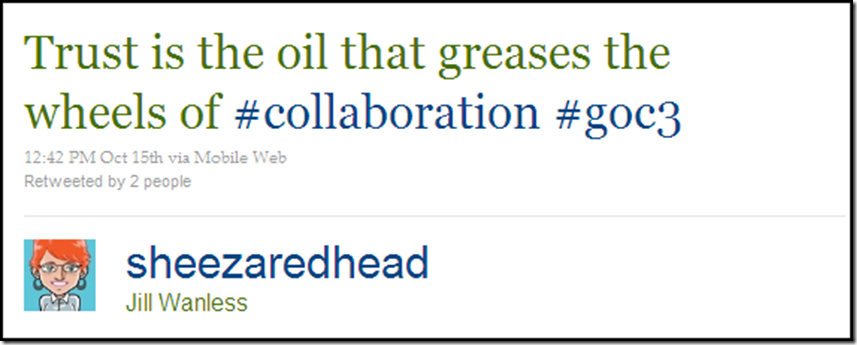
I was reminded of the topic of this post—trust—by this tweet by Jill Wanless sent from the recent Collaborative Culture Camp, which was a one day conference on enabling collaboration in a government context, held on October 15 in Ottawa, Ontario.
I followed the conference Twitter stream remotely and found many of the tweets interesting, especially ones about the role that trust plays in collaboration, which is one of my favorite topics in general, and one that plays well with my karma theme word.
Trust is not a checklist
The title of this blog post comes from the chapter on The Emergence of Trust in the book Start with Why by Simon Sinek, where he explained that trust is an organizational performance category that is nearly impossible to measure.
“Trust does not emerge simply because a seller makes a rational case why the customer should buy a product or service, or because an executive promises change. Trust is not a checklist. Fulfilling all your responsibilities does not create trust. Trust is a feeling, not a rational experience. We trust some people and companies even when things go wrong, and we don’t trust others even though everything might have gone exactly as it should have. A completed checklist does not guarantee trust. Trust begins to emerge when we have a sense that another person or organization is driven by things other than their own self-gain.”
Trust is not transparency
This past August, Scott Berkun blogged about how “trust is always more important than authenticity and transparency.”
“The more I trust you,” Berkun explained, “the less I need to know the details of your plans or operations. Honesty, diligence, fairness, and clarity are the hallmarks of good relationships of all kinds and lead to the magic of trust. And it’s trust that’s hardest to earn and easiest to destroy, making it the most precious attribute of all. Becoming more transparent is something you can do by yourself, but trust is something only someone else can give to you. If transparency leads to trust, that’s great, but if it doesn’t you have bigger problems to solve.”
Organizational Karma
Trust and collaboration create strong cultural ties, both personally and professionally.
“A company is a culture,” Sinek explained. “A group of people brought together around a common set of values and beliefs. It’s not the products or services that bind a company together. It’s not size and might that make a company strong, it’s the culture, the strong sense of beliefs and values that everyone, from the CEO to the receptionist, all share.”
Organizations looking for ways to survive and thrive in today’s highly competitive and rapidly evolving marketplace, should embrace the fact that trust and collaboration are the organizational karma of corporate culture.
Trust me on this one—good karma is good business.
Related Posts
The Challenging Gift of Social Media
The Game of Darts – An Allegory
The Business versus IT—Tear down this wall!
Video: Declaration of Data Governance