
Listening and Broadcasting
/
Photo via Flickr by: Colleen AF Venable |
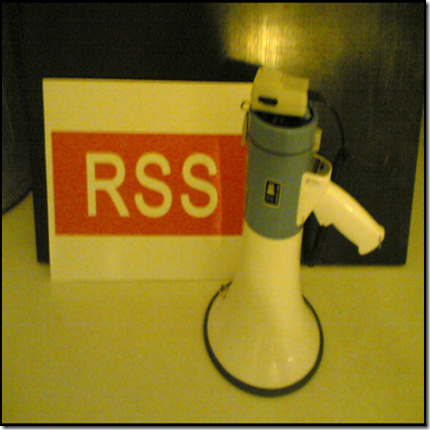
Photo via Flickr by: Anders Pollas |
As we continue to witness the decline of traditional media and the corresponding rise of social media, the business world is attempting to keep up with the changing times. Many organizations are “looking to do whatever it is that’s intended to replace advertising,” explained Douglas Rushkoff in a recent blog post about how marketing threatens the true promise of social media by “devolving to the limited applications of social marketing” and trying to turn the “social landscape back into a marketplace.”
We can all relate to Rushkoff’s central concern—the all-too-slippery slope separating social networking from social marketing.
The primary reason I started blogging was to demonstrate my expertise and establish my authority with regards to data quality and its related disciplines. As an independent consultant, I am trying to help sell my writing, speaking, and consulting services.
You and/or your company are probably using social media to help sell your products and services as well.
Effective social networking is about community participation, which requires actively listening, inviting others to get involved, sharing meaningful ideas, contributing to conversations—and not just broadcasting your sales and marketing messages.
An often cited reason for the meteoric rise of social media is its exchange of a broadcast medium for a conversation medium. However, some people, including Mitch Joel and Jay Baer, have pondered whether social media conversations are a myth.
“One of the main tenets of social media,” Joel blogged, “was the reality that brands could join a conversation, but by the looks of things there aren’t really any conversations happening at all.”
Joel wasn’t being negative, just observational. He pointed out that most blog comments provide feedback, not a back and forth conversation between blogger and reader, Twitter “feels more like everyone screaming a thought at once than a conversation that can be followed and engaged with” and “Facebook has some great banter with the wall posts and status updates, but it’s more chatty than conversational and it’s not an open/public environment.”
“To expect social media to truly emulate conversation as we know it is a fools errand,” Baer blogged. “The information exchange is asynchronous. However, there’s a difference between striving for conversation and settling for broadcasting. The success path must lie somewhere in the middle of those two boundaries.”
Regardless of how we are striving for conversation, whether it be blogging, tweeting, Facebooking, or a face-to-face discussion, we must remember the importance of empathically listening to each other—and not just waiting for our turn to broadcast.
An effective social media strategy is essential for organizations as well as individual professionals, but it is a constant struggle to find the right balance between the headphones and the bullhorn—between listening and broadcasting.
Related Posts
Social Karma (Part 2) – Social Media Preparation
Social Karma (Part 3) – Listening Stations, Home Base, and Outposts
Social Karma (Part 5) – Connection, Engagement, and ROI Basics
Please don’t become a zombie in 2011
Twitter, Meaningful Conversations, and #FollowFriday
The Challenging Gift of Social Media
Social Karma – The Art of Effectively Using Social Media in Business