
Social Karma (Part 3)
/In Part 2 of this series: We discussed leveraging social media for “listening purposes only” in order to assess what type of active involvement would make sense for you and your company. Just like with any professional endeavor, you need to honestly evaluate both your expectations and your readiness before getting actively involved with social media.
Additionally, we also discussed that using social media effectively requires a commitment—mostly measured in time.
In Part 3, we will begin discussing the basics of developing your social media strategy by first examining the benefits of establishing a blog (or company website) as your social media base of operations for effective online community participation.
Listening Stations
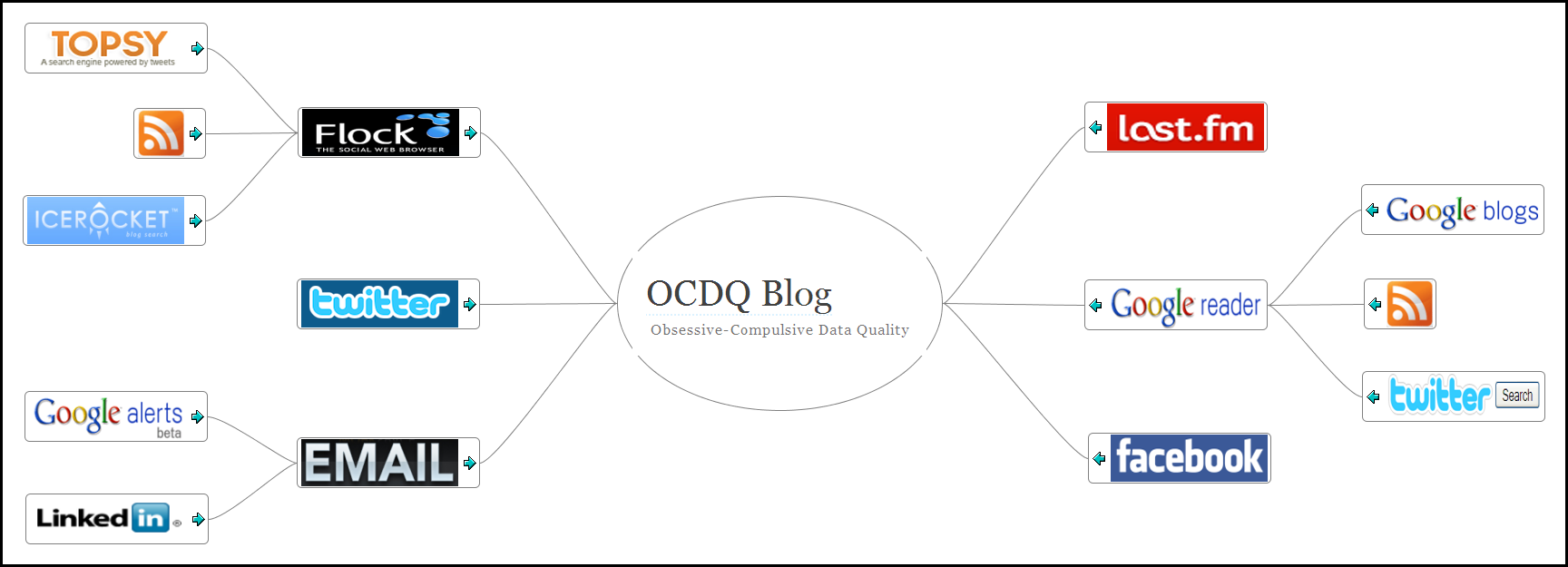
Your social media preparation involved actively listening to the online community. As you begin your social media engagement, your “listening station” must always remain active in order to maintain true community participation.
Actually, you will need to leverage multiple listening stations. The following diagram shows my OCDQ Blog listening stations:
If you are having trouble viewing it, click anywhere on the diagram to open it in a new window and/or download it (PNG file).
Home Base with Outposts
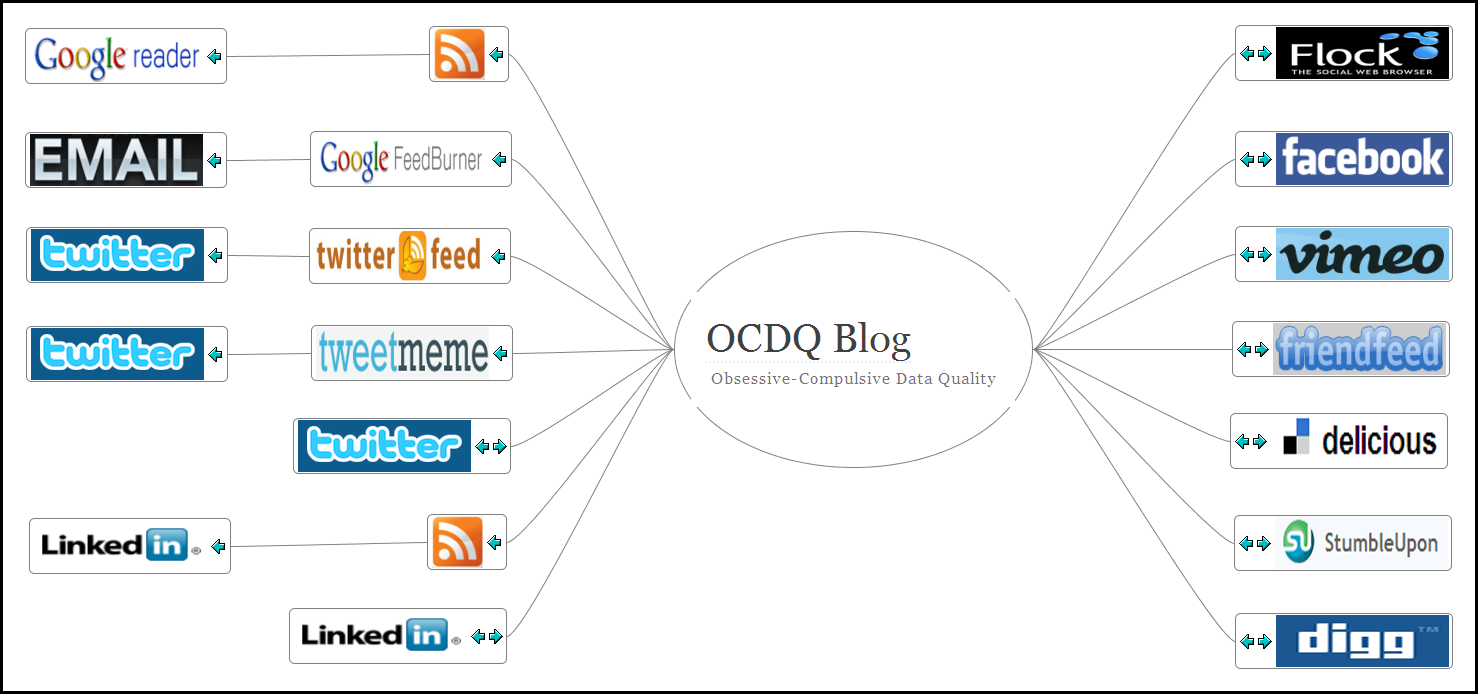
As Darren Rowse of ProBlogger explained in his blog post How to Promote a Blog with Social Media, Chris Brogan developed a social media strategy using the metaphor of a Home Base with Outposts.
“A home base,” explains Rowse, “is a place online that you own.” This is your social media base of operations for effective online community participation. For example, your home base could be your blog or your company's website.
“Outposts,” continues Rowse, “are places you have an online presence out in other parts of the web that you might not own.” For example, your outposts could be your LinkedIn, Twitter, and Facebook accounts.
The following diagram shows the home base with outposts framework used by my OCDQ Blog:
If you are having trouble viewing it, click anywhere on the diagram to open it in a new window and/or download it (PNG file).
Social Media Strategy
In this OCDQ Video, I provide an overview of my social media strategy based on my listening stations, home base, and outposts:
If you are having trouble viewing this video, then you can watch it on Vimeo by clicking on this link: OCDQ Video
Here are the links to the social media tools and services that I mentioned in the video:
- Flock
- IceRocket
- Twitter Search
- Topsy
- Twitterfeed
- TweetMeme
- Google Alerts
- Google Blog Search
- Google Reader
- Google FeedBurner
The Message of Social Media's Medium
Effective online community participation is about actively listening, inviting others to get involved, sharing meaningful ideas, contributing to conversations—and not selfishly distributing only your content or broadcasting only your message.
Social media is a conversation medium and not a broadcast medium.
In his book Understanding Media: The Extensions of Man, Marshall McLuhan coined the phrase: “the medium is the message.”
To slightly paraphrase the words of Mark Federman, social media provides the ability to connect with other members of the online community, to collaborate as we construct knowledge, to engage with one another's experiences, to bring multiple contexts into understanding what it is we are collectively creating through our connection.
Connection is the message of social media's medium.
In Part 4 of this series: We will continue discussing the basics of developing your social media strategy by reviewing some recommended blogging best practices and general guidelines for creating useful content in your own unique blogging style.
Related Posts
Social Karma (Part 1) – Series Introduction
Social Karma (Part 2) – Social Media Preparation
Social Karma (Part 4) – Blogging Best Practices
Social Karma (Part 5) – Connection, Engagement, and ROI Basics