
The Prince of Data Governance
/
The difference between politics and policies was explained in the recent blog post A New Dimension in Data Governance Directives: Politics by Jarrett Goldfedder, who also discussed the need to consider the political influences involved, as they can often have a far greater impact on our data governance policies than many choose to recognize.
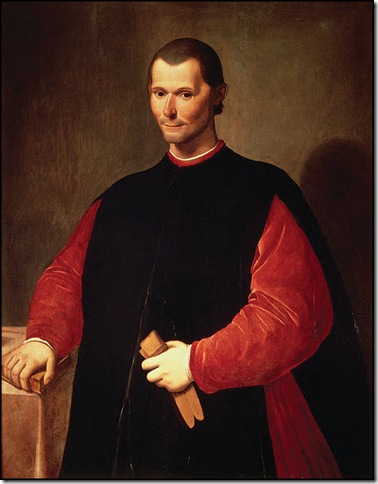
I definitely agree, especially since the unique corporate culture of every organization carries with it the intricacies and complexities of politics that Niccolò Machiavelli (pictured) wrote about in his book The Prince.
The book, even despite the fact it was written in the early 16th century, remains a great, albeit generally regarded as satirical, view on politics.
The Prince provides a classic study of the acquisition, expansion, and effective use of political power, where the ends always justify the means.
An example of a Machiavellian aspect of the politics of data governance is when a primary stakeholder, while always maintaining the illusion of compliance, only truly complies with policies when it suits the very purposes of their own personal agenda, or when it benefits the interests of the business unit that they represent on the data governance board.
Creating Accountability
In her excellent comment on my recent blog post Jack Bauer and Enforcing Data Governance Policies, Kelle O'Neal provided a link to the great article Creating Accountability by Nancy Raulston, which explains that there is a significant difference between increasing accountability (e.g., for compliance with data governance policies) and simply getting everyone to do what they’re told (especially if you have considered resorting to the use of a Jack Bauer approach to enforcing data governance policies).
Raulston shares her high-level thoughts about the key aspects of alignment with vision and goals, achieving clarity on actions and priorities, establishing ownership of processes and responsibilities, the structure of meetings, and the critical role of active and direct communication—all of which are necessary to create true accountability.
“Accountability does not come from every single person getting every single action item done on time,” explains Raulston. “It arises as groups actively manage the process of making progress, raising and resolving issues, actively negotiating commitments, and providing direct feedback to team members whose behavior is impeding the team.”
Obviously, this is often easier said than done. However, as Raulston concludes, “ultimate success comes from each person being willing to honestly engage in the process, believing that the improved probability of success outweighs any momentary discomfort from occasionally having to admit to not having gotten something done.” Or perhaps more important, occasionally having to be comfortable with not having gotten what would suit their personal agenda, or benefit the interests of their group.
The Art of the Possible
“Right now, our only choice,” as Goldfedder concluded his post, “is to hope that the leaders in charge of the final decisions can put their own political goals aside for the sake of the principles and policies they have been entrusted to uphold and protect.”
Although I agree, as well as also acknowledge that the politics of data governance will always make it as much art as it is science, I can not help but be reminded of the famous words of Otto von Bismarck:
“Politics is the art of the possible.”
The politics of data governance are extremely challenging, and yes, at times rather Machiavellian in their nature.
Although it is certainly by no means an easy endeavor for either you or your organization to undertake, neither is achieving a successful and sustainable data governance program impossible.
Politics may be The Prince of Data Governance, but as long as Communication and Collaboration reign as King and Queen, then Data Governance is the Art of the Possible.
Please share your thoughts about the politics of data governance, as well as your overall perspectives on data governance.
Follow OCDQ
If you enjoyed this blog post, then please subscribe to OCDQ via my RSS feed, my E-mail updates, or Google Reader.
You can also follow OCDQ on Twitter, fan the Facebook page for OCDQ, and connect with me on LinkedIn.