
The Point of View Paradox
/One of my all-time favorite non-fiction books is The 7 Habits of Highly Effective People by Stephen Covey.
One of the book’s key points is that we need to carefully examine our point of view, the way we “see” the world—not in terms of our sense of sight, but instead in terms of the way we perceive, interpret, and ultimately understand the world around us.
As Covey explains early in the book, our point of view can be divided into two main categories, the ways things are (realities) and the ways things should be (values). We interpret our experiences from these two perspectives, rarely questioning their accuracy.
In other words, we simply assume that the way we see things is the way they really are or the way they should be. Our attitudes and behaviors are based on these assumptions. Therefore, our point of view influences the way we think and the way we act.
A famous experiment that Covey shares in the book, which he first encountered at the Harvard Business School, is intended to demonstrate how two people can see the same thing, disagree—and yet both be right. Although not logical, it is psychological.
This experiment is reproduced below using the illustrations that I scanned from the book. Please scroll down slowly.
Illustrations of a Young Woman
Look closely at the following illustrations, focusing first on the one on the left—and then slowly shift over to the one on the right:
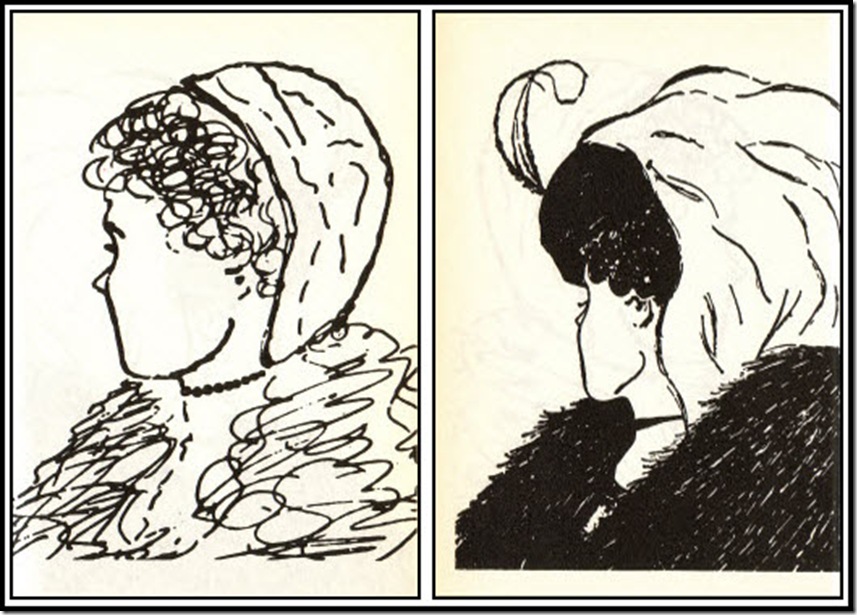
Can you see the young woman with the petite nose, wearing a necklace, and looking away from you in both illustrations?
Illustrations of an Old Lady
Look closely at the following illustrations, focusing first on the one on the left—and then slowly shift over to the one on the right:
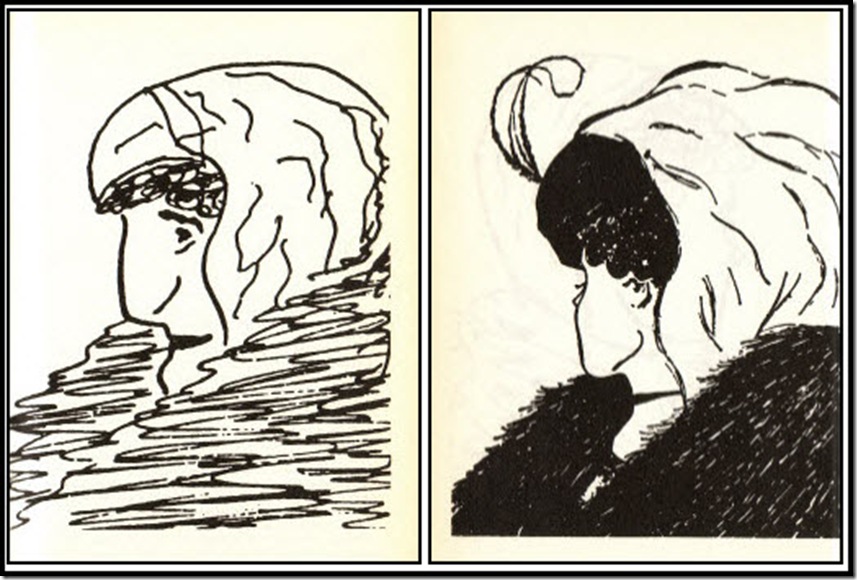
Can you see the old lady with the large nose, sad smile, and looking down in both illustrations?
Illustrations of a Paradox
Look closely at the following illustrations, focusing first on the one on the far left—and then on the one in the middle—and then shift your focus to the one on the far right—and then back to the one in the middle:
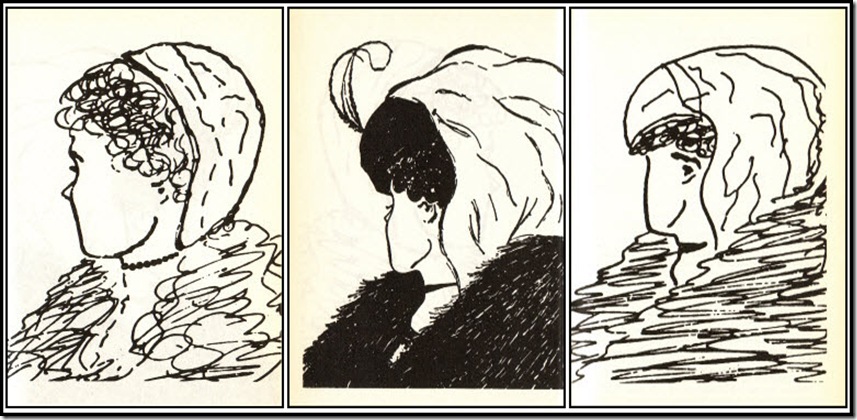
Can you now see both the young lady and the old woman in the middle illustration?
The Point of View Paradox
The above experiment is usually performed without using the secondary illustration (the one shown on the right of the first two and in the middle of the final one). Typically in a classroom setting, half of the room has their perception “seeded” utilizing the illustration of the young woman, and the other half with the illustration of the old lady. When the secondary illustration is then revealed to the entire classroom, arguments commence over whether a young woman or an old lady is being represented.
This experiment demonstrates how our point of view powerfully conditions us and affects the way we interact with other people.
In the world of data quality and its related disciplines, the point of view paradox often negatively impacts the communication and collaboration necessary for success.
Business and technical perspectives often appear diametrically opposed. Objective and subjective definitions of data quality seemingly contradict one another. And of course, the deeply polarized camps contrasting the reactive and proactive approaches to data quality often can’t even agree to disagree.
However, as Data Quality Expert and Jedi Master Obi-Wan Kenobi taught me a long time ago:
“You’re going to find that many of the truths we cling to depend greatly on our own point of view.”
Related Posts
Podcast: Business Technology and Human-Speak
Beyond a “Single Version of the Truth”
Hyperactive Data Quality (Second Edition)
Not So Strange Case of Dr. Technology and Mr. Business
You're So Vain, You Probably Think Data Quality Is About You
Follow OCDQ
If you enjoyed this blog post, then please subscribe to OCDQ via my RSS feed, my E-mail updates, or Google Reader.
You can also follow OCDQ on Twitter, fan the Facebook page for OCDQ, and connect with me on LinkedIn.