
The Partly Cloudy CIO
/This blog post is sponsored by the Enterprise CIO Forum and HP.
The increasing frequency with which the word cloud is mentioned during information technology (IT) discussions has some people believing that CIO now officially stands for Cloud Information Officer. At the very least, CIOs are being frequently asked about their organization’s cloud strategy. However, as John Dodge has blogged, when it comes to the cloud, many organizations and industries still appear to be somewhere between FUD (fear, uncertainty, and doubt) and HEF (hype, enthusiasm, and fright).
Information Technology’s Hierarchy of Needs
|
|
|
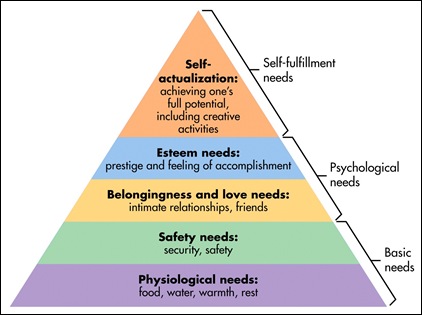 Abraham Maslow’s Hierarchy of Needs
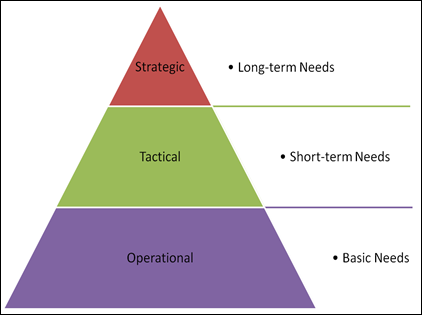 Information Technology’s Hierarchy of Needs
Joel Dobbs describes IT’s hierarchy of needs (conceptually similar to Abraham Maslow’s hierarchy of needs) as a pyramid with basic operational needs at the bottom, short-term tactical needs in the middle, and long-term strategic needs at the top.
Dobbs explains that cloud computing (and outsourcing) is an option that organizations should consider for some of their basic operational and short-term tactical needs in order to free up internal IT resources to support the strategic goals of the enterprise.
Since cost, simplicity, speed, and agility are common business drivers for cloud-based solutions, this approach alleviates some of the bottlenecks caused by rigid, centralized IT departments, allowing them to cede control over less business-critical applications, and focuses them on servicing the unique needs of the organization that require their internal expertise and in-house oversight.
The Partly Cloudy CIO
The white paper Get Your Head in the Cloud is a good resource for information about the various cloud options facing CIOs and distinguishes among the choices based on specific business requirements. The emphasis should always be on technology-aware, business-driven IT solutions, which means selecting the technology option that best satisfies a particular business need — and data security is one obvious example of the technology awareness needed during the evaluation of cloud-based solutions.
Although no one is advising an all-or-nothing cloud strategy, cloud computing is becoming a critical component of IT Delivery. With hybrid solutions becoming more common, the forecast for the foreseeable future is calling for the Partly Cloudy CIO.
This blog post is sponsored by the Enterprise CIO Forum and HP.
Related Posts
A Sadie Hawkins Dance of Business Transformation
Are Applications the La Brea Tar Pits for Data?
Why does the sun never set on legacy applications?